




Join the What to Cook Community
What to Cook When You Don’t Feel Like Cooking is… exactly that. One craveable, “complete meal” recipe delivered to your inbox every Saturday morning. What to Cook takes the guesswork out of mealtime. Beautiful meals to be proud of, in under an hour. Here’s what you’ll have access to:
Free Members
- One monthly exclusive recipes
- mid-week so into that email
Paid Members
- Exclusive recipes every saturday Morning
- mid-week so into that email
- Full archive of 260+ past recipes
Insiders
- Exclusive recipes every Saturday morning
- Mid-week So Into That email
- Full archive of 260+ past recipes
- 2 annual gift subscriptions to What To Cook ($100 value)
- Access to 6 meal prep plans by Caro ($180 value)
- Monthy LIVE cooking demos
- A free gift valued at $60 and a $25-off shopping credit for you first 4 orders at Thrive Market
- A free month plus $125 in credits to Duckbill
Did you know you can Gift a Subscription to What to Cook ?
Treat your favorite foodie to a month or year of What to Cook. Packed with easy recipes and cooking tips, it’s the perfect gift for anyone who loves to eat well—even on the days they don’t feel like cooking!
Want to see what we’re all about before you subscribe? Makes Sense.
Check out three What to Cook exclusive recipes below!

Ingredients
Coconut-Ginger Rice:
- 1 1/2 cups white rice (any kind!)
- 1 (14.5 ounce) can coconut milk
- 1 cup water
- 1 tablespoon honey
- 1-inch piece ginger, washed and grated (no need to peel), or 1/4 teaspoon ground ginger
- 1/2 teaspoon kosher salt
Peanut Sauce:
- 1/3 cup smooth peanut butter
- 1/4 cup soy sauce
- Juice of 1 lime (or 2 tablespoons rice wine vinegar)
- 1 tablespoon honey
- 1 to 2 tablespoons sriracha or sambal oelek or really any spicy chili paste
Thai Basil Beef:
- 1 tablespoon sesame oil
- 1 medium yellow onion, diced
- 1 pound ground beef (ideally 90% lean/10% fat, but anything works)
- 2-inch piece fresh ginger, washed and grated (no need to peel), or 1/2 teaspoon ground ginger
- 3 garlic cloves, grated (or 1/2 teaspoon garlic powder)
- 1/2 teaspoon kosher salt
- 3 tablespoons soy sauce
- 3 tablespoons rice vinegar
- 1 tablespoon honey
- 1 tablespoon sriracha or sambal oelek
- 1 tablespoon fish sauce
- 1/2 cup finely chopped basil leaves (or cilantro)
- Optional toppings (you need at least 2!): chopped mango (or nectarines like I used), diced cucumber, shredded carrot, thinly sliced avocado, thinly sliced bell pepper, fresh cilantro, fresh mint leaves, roasted peanuts or cashews, toasted coconut, toasted sesame seeds, lime wedges
Steps
- Start with the coconut rice! Add 1 1/2 cups white rice, 1 can coconut milk, 1 cup water, 1 tablespoon honey, a grated 1-inch piece of ginger, and 1/2 teaspoon salt to a pot and bring to a boil over high heat. Reduce heat to low, cover, and simmer for 14 to 16 minutes until rice is tender (give it a taste to check!). Remove from heat and let sit covered until you’re ready to eat, at least 10 minutes. Fluff with a fork before serving.
- While the rice is cooking, mix together the peanut sauce and cook the basil beef.
- To make the peanut sauce, stir together 1/3 cup smooth peanut butter, 1/4 cup soy sauce, the juice of 1 lime, 1 tablespoon honey, and 1 to 2 tablespoons sriracha (1 will give it some heat, 2 will be spicy!) in a large bowl until smooth. Add 1 to 2 tablespoons of warm water (or however much is needed) to make it a drizzle-able consistency. Set aside.
- To cook the Thai basil beef, warm 1 tablespoon sesame oil in a large nonstick skillet over medium-high heat. Add 1 diced medium yellow onion and cook for 2 to 3 minutes, until softened. Add 1 pound ground beef, and use a microplane to grate a 2-inch piece of ginger (no need to peel it) and 3 garlic cloves directly into the skillet.
- Season with 1/2 teaspoon kosher salt and cook the beef for 3 to 4 minutes, breaking it apart with a spatula into as small of pieces as possible. There will be a lot of liquid in the skillet as the meat releases its moisture. Continue cooking, stirring constantly, until all liquid has evaporated. Resist the urge to pour off the fat (unless you used 80/20%, in which case you can pour off half of the fat) — this is the flavor!
- Add 3 tablespoons soy sauce, 3 tablespoons rice vinegar, 1 tablespoon honey, 1 tablespoon sriracha, and 1 tablespoon fish sauce to the meat and stir until much of it has been absorbed, about 1 minute. There will still be some sauce in the bottom of the skillet — that’s a good thing! We like it saucy.
- Turn off the heat and stir in 1/2 cup finely chopped basil leaves.
- Build your bowl with coconut-ginger rice, peanut sauce, and lots of toppings!
- To cook rice in an InstantPot: Use 1 1/2 cups rice, 1 can coconut milk, but only 1/2 cup water. Cook for 5 minutes (along with the other ingredients), then allow the pressure to naturally release for 10 minutes. I love cooking rice in the IP!
- Gimme some greens: Add steamed spinach! Once the time is up on the rice, stir it, then add three big handfuls of spinach right on top, cover, and let it sit for 10 minutes. It’ll steam in the residual heat!
- Oh, another greens addition idea! Finely chop a few handfuls of any dark leafy green — spinach, kale, chard — and stir it into the beef while cooking it.
- My current hyper-fixation salad would be great on the side if you want to bulk this up: Cucumber, pepper, avocado salad.
- Save time: Use steam-in-bag frozen rice instead of making coconut rice.
- Feeding kids: You can leave the sriracha out of the sauce! Just add sriracha to the table and let people who like spice drizzle it on their bowls.
- Make ahead: The Thai basil beef, coconut rice, and peanut sauce can all be cooked up to 3 days ahead of when you plan to eat! Store them separately in airtight containers in the fridge. The peanut sauce will thicken as it sits — stir in splashes of warm water to loosen it up before serving. Reheat the beef and rice on the stovetop, in the oven (in any oven-safe dish for a few minutes at 300°F until warm), or in the microwave.
- Freezer-friendly: Both the rice and beef freeze beautifully for up to 3 months! In both cases, let the dish cool completely then transfer leftovers to a Ziploc bag (either one gallon-size bag or multiple smaller bags). To reheat frozen rice, chip off however much you want to eat and add it to a microwave-safe bowl. Top the bowl with plastic wrap or a reusable, microwave-safe lid or plate. Microwave for 2 to 3 minutes, or until warmed through. Careful when you’re taking the top off — there will be steam! For the beef, let it thaw overnight in the fridge then reheat it. Doubling the beef to freeze half would be a very good idea!
- Love your leftovers: Leftover beef and rice will be good for up to 3 days stored in the fridge. With them, you could make lettuce wraps, filling leaves of Bibb, iceberg, or little gem lettuce with leftover beef, rice, kimchi, and toppings! Drizzle with leftover peanut sauce! Leftover peanut sauce would also be good on any roasted veggies (I LOVE it on roasted broccoli, Brussels sprouts, and cauliflower), and will keep in the fridge for at least a week.
- Dairy-free/gluten-free/nut-free: It’s already dairy free! To avoid gluten, use tamari or coconut aminos instead of soy sauce. To avoid nuts, use a seed butter like sunflower butter or tahini and choose your toppings carefully!
- Vegetarian: Swap the beef for a plant-based ground meat alternative. Or tofu! Make crispy tofu however you like to make it. One idea: squeeze out as much moisture as possible over the sink. Heat 2 tbsp oil over high heat. Crumble the tofu in and cook until crispy. Then add all of the same sauces that I added to the beef!
-
Jasmine rice: Any kind of white rice will work! Brown rice would work too but you’ll need to increase the water to 1 1/2 cups as well as the cook time (check the bag of your rice for exact time).
-
Coconut milk: Coconut cream will also work, or omit and cook with all water if you can’t find coconut milk.
-
Honey: Brown sugar, agave, maple syrup, white sugar…
-
Ginger: Ground ginger or omit
-
Garlic: 1/2 teaspoon garlic powder or 3 frozen minced garlic cubes
-
Peanut butter: Any nut or seed butter. I love making this sauce with almond butter and sunflower butter.
-
Soy sauce: Tamari, coconut aminos, shoyu…
-
Lime juice: 2 tablespoons rice wine vinegar or another light-colored vinegar (like apple cider or white wine)
-
Sriracha: Sambal oelek, harissa, or chili garlic sauce. Or 1/4 teaspoon red pepper flakes per 1 tablespoon sriracha.
-
Sesame oil: Any cooking oil, but, if you have it, add 1 tablespoon tahini to the beef when you add the soy sauce, etc., for some sesame flavor.
-
Yellow onion: 1 bunch of thinly sliced scallions, or pretty much any other medium onion. Or two shallots.
-
Ground beef: Any ground meat works — turkey, chicken, pork, vegetarian ground meat alternative. Pork is my second favorite, but chicken is great when you want something lean.
-
Rice vinegar: Apple cider vinegar, white wine vinegar, red wine vinegar, or lime juice
-
Fish sauce: This is so crucial to the flavor! You can swap in soy sauce but trust, fish sauce is so good. It smells really funky on its own… don’t sniff it. You could also use a vegan fish sauce or soy sauce + some mushroom umami powder.
-
Basil: Equal parts cilantro or 1/4 cup chopped mint
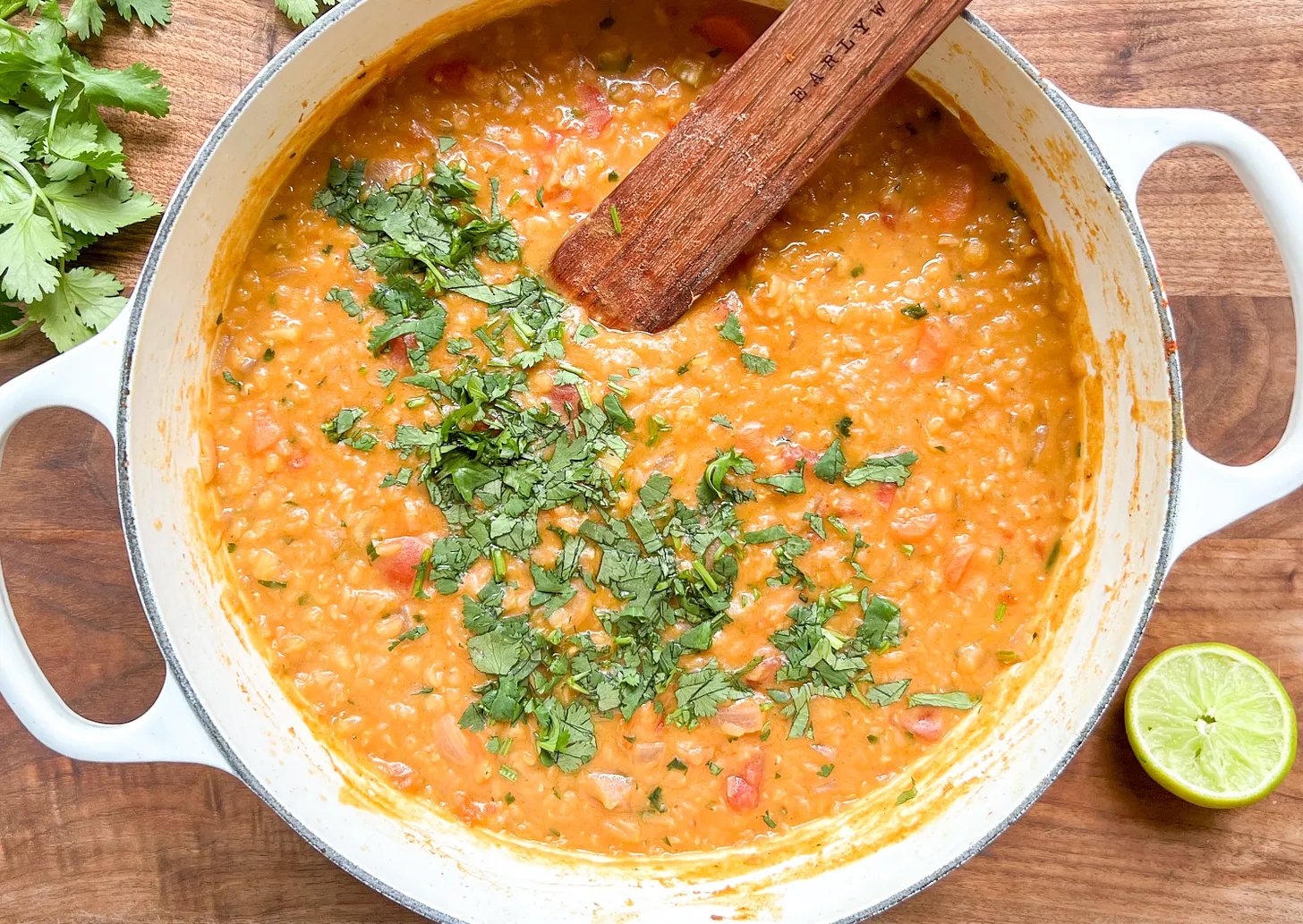
Ingredients
- 1 medium red or yellow onion, minced
- 2 celery stalks, minced
- 3 medium carrots, scrubbed clean and thinly sliced
- 2 tablespoons coconut oil or other neutral cooking oil
- Kosher salt and freshly ground black pepper
- 1 (2-inch) piece fresh ginger, minced or grated
- 4 garlic cloves, minced or grated
- 1 to 3 tablespoons red curry paste (depending on the brand! see notes below!)
- 16 ounces (2 cups) dry red lentils
- 1 quart veggie stock (or 4 cups water plus 1 heaping tablespoon veggie or chicken Better Than Bouillon)
- 2 (13.5-ounce) cans full-fat coconut milk
- 1 (13.5-ounce) can crushed or diced tomatoes
- 1 small bunch fresh cilantro
- 1 tablespoon fish sauce
- 1 lime
Steps
- We’ve got some chopping to do! You are free to do it in the food processor (chop each veggie into 4 big pieces, then pulse) or use a knife and get to it!
- If using a knife: Mince 1 medium onion and 2 celery stalks. Thinly slice 3 carrots into round pieces. If the carrot is so thick that the piece would be too big to eat, cut the carrot in half vertically first.
- Warm 2 tablespoons oil in a large pot over medium heat. Add the chopped veggies and a big pinch of salt and pepper and stir until tender, 4 to 5 minutes. Turn up the heat if needed, but don’t let them brown too much. Meanwhile, mince or grate a 2-inch piece of ginger (no need to peel it) and 4 garlic cloves.
- Stir in the the red curry paste (read notes below to determine how much you should add). Add the minced garlic and ginger and stir for 1 minute.
- Add 16 ounces red lentils, 1 quart (4 cups) veggie stock, 2 cans coconut milk, and 1 can crushed tomatoes.
- Bring to a boil over high heat, then reduce to medium-low to simmer for 20 to 25 minutes. The lentils should be tender, but not totally mushy.
- While the lentils are cooking, finely chop 1 small bunch fresh cilantro (both leaves and stems). We are looking for 1/3 to 1/2 cup of chopped cilantro. Set some aside for garnish, and add the rest to the pot.
- Stir in 1 tablespoon fish sauce and 1 tablespoon lime juice. Taste. If it’s not delicious, it probably needs more salt. Mine needed about 1/2 teaspoon salt, but this will depend entirely on how salty your stock and fish sauce are. Stir in a little pinch of salt at a time and keep tasting and adding until it’s perfect.
- Serve with cilantro on top.
- But I hate lentils: OK, let’s just make a curry veggie soup! Add 3 cups of 1/2-inch chopped hard vegetables such as sweet potatoes, potatoes, cauliflower, or parsnips, and only add 1 cup of stock instead of 4 cups. Cook until all of the veggies are fork tender, 20 to 25 minutes. See the headnote for 2 more sub options (chickpeas and chicken!) and how to swap them in.
- But I hate curry: Omit the curry paste and add 1 tablespoon garam masala and 1 teaspoon cumin instead. Tikka masala vibes! Don’t like that either? Just omit the curry and you’ll be left with a tomato coconut broth that will be fab. Add extra fish sauce, salt, and lime juice (just a pinch or splash at a time) until it’s perfectly flavorful and delicious.
- So how much curry paste do I use? This will depend on how spicy the brand you have is — they vary a lot. Thai Kitchen red curry paste is really weak, so use 2 to 3 tablespoons of it. Mae Ploy, Mekhala, and Maesri on the other hand are REALLY spicy, so start with one scant tablespoon. Blue Elephant brand has medium spice, so start with 1.5 tablespoons, and add more if desired. If you have a brand of red curry paste not mentioned here, taste it before you add any. Is it super spicy? Use the scant tablespoon starting point. Is it totally mild? Go the 2 to 3 tablespoon route. Remember, it’s easier to add more spice than it is to dial it back!!
- Must have meat: See the headnote above the recipe for how to turn this into a chicken curry.
- Add a grain: It’s a filling meal as is, but I threw some leftover rice (and shredded chicken) into my leftovers yesterday and it was 10/10. The stew would also be delicious plated atop this cilantro-lime rice or some fresh pita.
- Save time: Trader Joe’s and many other grocery stores carry pre-chopped mirepoix (chopped carrots, celery, and onion). Grab one of those and use in place of the carrots, onion, and celery. Use the whole container. If your store doesn’t sell it, they might at least sell diced onion, which is another time-saving hack that I fully endorse.
- Prep ahead: Chop the veggies up to 3 days in advance and store them in an airtight container in the fridge. Alternatively, you could go ahead and make the whole thing up to a day ahead of time and store it in the pot with its lid on in the fridge. Reheat it on the stove over medium heat, adding splashes of veggie stock or water as needed to loosen it up.
- Love your leftovers/freezer-friendly: Leftovers will stay good in the fridge for up to 5 days. Or you could freeze any extra stew for up to 3 months. I love to freeze them in quart-sized Ziplocs. Lay them on a baking sheet in the freezer at first so they freeze into a nice flat sheet — this makes them easy to store. You could halve the recipe if you’re cooking for 2 and don’t want leftovers. Or double it if you want to freeze a batch or take some to a friend or neighbor!
- What to cook with your leftover red curry paste: The thai chicken chop and/or peanut vegetable curry would be amazing additions to your meal plan this week or next.
- Add some leafy greens: Throw a few handfuls of chopped spinach, kale, Swiss chard, or escarole in at the same time as the cilantro and stir until wilted.
- Dairy-free: Already is!
- Gluten-free: Fish sauce is one of those sometimes-it-is-GF, sometimes-it’s-not-GF ingredients, so check the bottle. If needed, use tamari, coconut aminos, or shoyu instead.
-
Onion: Any color onion, 2 large shallots, or 2 leeks (thinly sliced; white and light green parts only)
-
Celery: A small head of fennel or 2 extra carrots
-
Carrots: Parsnips or 3 extra stalks of celery
-
Coconut oil: Olive oil or another neutral cooking oil like grapeseed, avocado, or canola oil
-
Ginger: 2 teaspoons ground ginger or 4 frozen minced ginger cubes
-
Garlic cloves: 1/2 teaspoon garlic powder
-
Red curry paste: 1 tablespoon curry powder + 1 tablespoon fresh grated ginger + 2 teaspoons cumin + 2 teaspoons chili powder + 1 teaspoon turmeric. Yellow curry paste also works. But red curry paste is a pretty common ingredient at most major grocers, so you should be able to easily find it!
-
Dry red lentils: Dry green, brown, or yellow lentils. If swapping in a different color lentil, start taste-testing at around 15 minutes, tasting every few minutes until they’re tender but not totally mushy (they all cook at slightly different speeds). Or you could use 2 cans of drained canned lentils or chickpeas. If using canned, only use 1 cup of stock and simmer the lentils/beans and veggies for 25 minutes. Read the headnote’s “no lentils, please” section for how to swap in chicken. And read the “but I hate lentils” note for how to make a delicious veggie curry sans lentils.
-
Veggie stock: 4 cups water plus 1 heaping tablespoon veggie or chicken Better Than Bouillon. Or you could use veggie or chicken broth (or chicken stock).
-
Coconut milk: Shop for full-fat coconut milk instead of lite — lite won’t thicken the curry up as much as we want. You could also use cans of coconut cream if that’s all you can find. Alternatively, you can use heavy cream or Greek yogurt to thicken the stew. Start with 1/4 cup and add more as desired (just not too much that it overpowers the curry flavors!).
-
Crushed or diced tomatoes: A can of tomato purée or half a can whole peeled tomatoes (just crush or dice the whole tomatoes by hand or in a blender first)
-
Cilantro: Basil or a green like spinach or omit
-
Fish sauce: Soy sauce, shoyu, coconut aminos, tamari
-
Lime juice: A tablespoon of light-colored vinegar (good options would be rice vinegar or white wine vinegar)

Ingredients
- 1 1/2 cups white rice, rinsed (I like to use sushi rice here)
- 1 (14-ounce) can coconut milk
- 1 1/4 cups water
- 5 tablespoons honey, divided
- Kosher salt
- 1 pound broccoli florets, broken or cut into 1 1/2-inch pieces (you can buy a bag of florets or a head of broccoli, whichever works!)
- 1/4 cup low-sodium soy sauce
- 1 tablespoon fish sauce
- 1 tablespoon gochujang or sriracha
- 1 tablespoon water
- 1/2 teaspoon garlic powder
- 4 (6-ounce) salmon filets, cut into 1-inch cubes (as a reminder, I love Atlantic farmed salmon even though it is less nutritious and environmentally friendly because it tastes a lot better IMO)
- Roughly 2 tablespoons cooking oil
- 2 tablespoons unsalted butter
Steps
- Combine 1 1/2 cups rinsed white rice (see notes for how to rinse it), 1 can coconut milk, 1 1/4 cups water, 2 tablespoons honey, and 1/2 teaspoon kosher salt in a wide saucepan/pot. Bring the mixture to a boil over high heat, then reduce the heat to the lowest heat possible and COVER for 10 minutes.
- Take a big piece of parchment paper and poke holes all over it. After the rice has cooked for 10 minutes, give the rice a stir, place the parchment paper on top of the rice, and add 1 pound broccoli florets to the parchment paper. COVER and cook on low for 10 more minutes, or until the broccoli is tender to your liking (some like it super soft, some like it with a bite — do your thing!) and the rice is cooked through. Turn off the heat. Keep it covered until it’s time to serve.
- While the rice is cooking, get cranking on the salmon! In a bowl, combine 1/4 cup soy sauce, 3 tablespoons honey, 1 tablespoon fish sauce, 1 tablespoon gochujang, 1 tablespoon water, and 1/2 teaspoon garlic powder.
- Cut 4 salmon filets into 1-inch cubes (fyi, your top thumb joint is about 1 inch!). Season with a tiny pinch of salt.
- In your largest skillet (preferably non-stick if you aren’t comfortable with cooking fish), warm enough oil to coat the bottom of the skillet (it was about 2 tablespoons for my 12-inch skillet) over medium-high heat.
- Add the salmon cubes in an even layer and cook until crisp, 3 to 4 minutes. Use a thin spatula to get underneath the fish without tearing it. Flip and cook for another 3 minutes, or until the salmon easily releases from the skillet. Add the bowl full of sauce plus 2 tablespoons butter to the skillet, crank the heat up to high, cook for an additional 2 to 3 minutes until the sauce thickens and coats the salmon. Gently flip the salmon over a few times to coat it. Keep a close eye on things after you turn the heat up to high — we want the sauce to thicken to a nice saucy consistency, not evaporate to the point of burning. The salmon will turn a nice golden brown on the edges when it’s ready.
- Make bowls with coconut rice, salmon, and broccoli. Drizzle the sauce over everything. YUMMMM!
- Totally optional garnish: If you’ve got them, sesame seeds, cilantro, and/or thinly sliced green onion (green parts only) would all be great sprinkled on top!
- How do I rinse rice? Put the rice in the pot, cover it with water, swish it around with your hand, then carefully dump out the water. Repeat this process until the water runs clear.
- Coconut rice? Oh yes! I honestly have to stop myself from including coconut rice in every single Asian-inspired dish here on What To Cook. It’s just so dang good. My kids love it, I love it, everyone loves it! So we’ve only had coconut rice twice — once with pork lettuce wraps and then again with jerk chicken and strawberry salad. Here, the creamy coconut rice is the perfect base for super saucy salmon and simply steamed broccoli. If you’re new to WTC, welcome to the official Coconut Rice Fan Club. Swap it in for regular rice whenever you want to from this day forward!
- Shortcuts: Ask your fishmonger to take the skin off your salmon and to cube it for you. Buy bagged broccoli that’s already in florets (break any really big ones with your hands). You could swap the coconut rice out for regular rice if you want to use a microwavable frozen rice to cut down on effort, but it won’t be as good!
- Prep ahead: Cook your rice and broccoli up to a day ahead of time. Store them in airtight containers and reheat before mealtime (either on the stove — you’ll need to add splashes of water to loosen up the rice — or in the microwave). You could also cube your salmon earlier in the day and mix up the sauce. Store all in the fridge in airtight containers.
- Love your leftovers: Leftovers will stay good in airtight containers in the fridge for up to 3 days. I personally don’t love leftover fish, so would recommend adjusting how much fish you buy based on how much you’ll realistically eat for this one meal. Leftover rice, broccoli, and sauce, however, will be amazing!! You could add any protein you’ve got — crispy chickpeas, shredded rotisserie chicken, leftover pork tenderloin — to the mix for a delicious lunch. You could also freeze leftover rice and broccoli for up to 3 months (I’d freeze them in separate Ziploc bags).
- Vegetarian: Tofu cubes! Use firm or extra firm tofu, drain and press the block between your hands to remove the excess liquid, and cube it. Cook it the same way as the salmon.
- DF/GF: Use dairy-free butter or just omit it. To avoid gluten, use coconut aminos or tamari in lieu of soy sauce. Also, use sriracha instead of gochujang, or look for a brand of gochujang that’s gluten free as most contain it.
-
White rice: Like I said, I like using a short-grain sushi rice like this here, but you should be able to swap in any white rice (just taste it after it’s cooked for 20 minutes! If it’s not fully cooked, add more water if needed and let it cook a few more minutes, being careful not to let it burn). You could also use brown rice, but it’ll take longer to cook and you’ll need to double the water.
-
Coconut milk: A can of coconut cream will also work, or omit and cook 1 1/2 cups of white rice with 2 cups of water, if you aren’t into coconut.
-
Honey: For the coconut rice, swap the honey out for 1 tablespoon granulated sugar or coconut sugar. For the sauce, use maple syrup, granulated, or brown sugar, stirring until dissolved (though honey will be best in the sauce!).
-
Broccoli: Another veggie or green you love steamed like cauliflower, green beans, kale, or spinach cooked the same way. And yes, you could use frozen broccoli! You won’t need to thaw it.
-
Soy sauce: Coconut aminos, tamari, shoyu
-
Fish sauce: Oyster sauce or extra soy sauce (or tamari or coconut aminos)
-
Gochujang: Sriracha or sambal oelek
-
Garlic powder: 4 grated fresh garlic cloves
-
Salmon: If you’re looking to sub in another fish, ask your fishmonger (aka the person selling you the fish) what they have that would be the best sub for cubed salmon. Amberjack/Yellowtail, Arctic Char, Bluefish, Mackerel, Mahi Mahi, Tilefish, Wahoo — these should all work as the recipe’s written. You could also swap in shrimp, but will only need to cook it for about 1 minute per side before adding the sauce. Cubed chicken breasts or thighs would also be great! Chicken will likely need 4 minutes per side to cook through (use a meat thermometer if you’re unsure of doneness — it should reach 165°F internally).
-
Cooking oil: Any oil will do! Olive, canola, vegetable, safflower, avocado, grapeseed, etc.
-
Unsalted butter: Salted butter, if it’s all you’ve got, or omit if you don’t have any.